Showing posts with label Deep Blue Home. Show all posts

Tuesday, January 4, 2011

THE TIDES WITHIN US


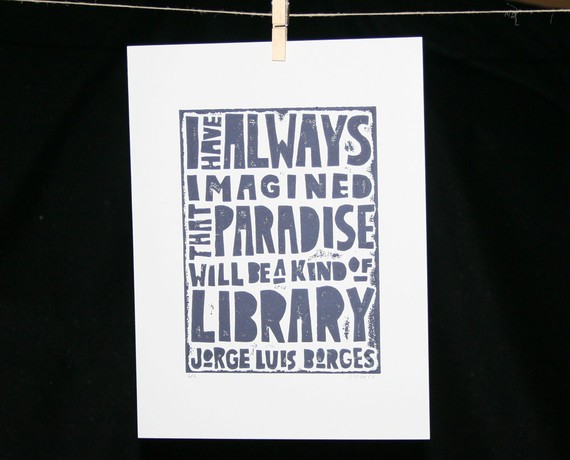
My friend Colette at Raw Art Letterpress has created an original handmade letterpress print of the last line of my book, DEEP BLUE HOME.


Some of you may remember that for the release of that book last year she also made a print called Breathe.


Here are a few other favorites.


Her shop is on Etsy, her prices extremely reasonable, and here are the links:


Friday, October 8, 2010

RANDOM EXCERPT: FILMING FROM THE BLUFFS

(Colony of northern gannets at Cape Saint Mary's Ecological Reserve, Newfoundland. Photo by Bigg(g)er, courtesy Wikimedia Commons.)  

Cape Saint Mary's Ecological Reserve on the island of Newfoundland is one of my favorite places on Earth. 


Look at the monster continental shelf all around it. That's none other than the Grand Banks, the fishing grounds that fueled Europe for 500 years. 

Cape Saint Mary's lies on a point of land between fjords. In bird-world economics, that's like living between Costco and Home Depot.

(Photo by Johnath, courtesy Wikimedia Commons.) 

Only way bettah.


(Capelin spawned out on a beach in Newfoundland. Photo by Litehouseman, courtesy Flickr.) 

The birds are here for these waters' many piscivorous banquets, including the annual capelin feast: aka, the spawning run, known locally as the scull. This is the time each summer when capelin by the millions head up onto dry land to spawn.

More on that in a later post.


(Atlantic puffin with capelin off Newfoundland. Photo by Nilfanion, courtesy Wikimedia Commons.)

(A mated pair of northern gannets performing their courtship display, including fencing with their bills. Photo by naturepicsonline, courtesy Wikimedia Commons.)

Cape Saint Mary's is widely recognized as one of the most accessible seabird rookeries in the world, where you can see—from dry land and from as little as 30 feet away—spectacular aggregations of northern nesters:
  • 24,000 northern gannets
  • 20,000 black-legged kittiwakes
  • 20,000 common murres
  • 2,000 thick-billed murres
  • 200 razorbills
  • black guillemots
  • double-crested cormorants 
  • great cormorants
  • northern fulmars
(Northern gannet with nesting material. Photo by Andreas Trepte, courtesy Wikimedia Commons.)


(Razorbill, in similar nesting conditions to Cape Saint Mary's, in Westfjords, Iceland. Photo courtesy Wikimedia Commons.)

(Black guillemot at Oban Harbour, Scotland. Photo by Kelson, courtesy Wikimedia Commons.)

Here's an excerpt about time I spent at Cape Saint Mary's. From DEEP BLUE HOME.
Filming from the bluffs, we are buffeted by the collective voice of the birds, as rough as the sea below and likewise rising, cresting, breaking into squawks, chuckles, squalls, trills, shouts. Dr. Charles W. Townsend, visiting the gannets in 1919, described their calls as "the sound of a thousand rattling looms in a great factory."
Thousands of long-winged, long-tailed birds are woven onto the wind, white crosses billowing on veils of fog. Heads down or cocked to the side, the gannets call to their mates below, sifting through the mayhem for familiar return calls, their personal homing beacons. When heard, the receiving bird retracts its wings, extends its legs, and drops—as light as a falling handkerchief that neatly folds itself upon landing.
The great looms of the gannets are joined by other calls: the breaking-glass kitt-ih-wake! of the kittiwakes; the purring and moaning of turrs—Newfoundland for murres; the grumpy growling of razorbills; the piping and hissing of guillemots; the strangled croaks of cormorants; the adenoidal cackling of fulmars. Add to these the high-pitched peeps of chicks, including those still in the egg, yet already talking to their parents (as with the murres), and you have a fully fledged United Nations of multispecies languages—as if all the tongues you heard on the New York City subway were not just of humans but also our relatives, gorillas, chimpanzees, bonobos, orangutans, gibbons, macaques, baboons, complete with their children in utero and ex utero... a loud, loquacious, repetitive, insistent, hurried, harried, and vital discourse.
We capture as many dramas as we can crowd onto our limited allotment of film, the courtships, the copulations, the pipping of eggs, the chicks diving into the gullets of their parents, the parents diving into the thrashing waters, the varieties of flight in all its aerodynamic design, stretched on the stop-motion of the wind. With long lenses we investigate the nests of diving birds on the cliffs below in search of interesting finds from the deep. To the north, off the coast of Labrador, fishermen report nests full of pocketknives, smoking pipes, hairpins, and ladies combs, salvaged by cormorants diving onto the wrecks of old trading vessels.


(Double-crested Cormorant in breeding plumage. Photo by Mike Baird, courtesy Wikimedia Commons.)


The video is of Cape gannets—close relatives of northern gannets—feeding on the sardine run off South Africa. I had the good fortune years ago to work with the first South African film crew to land this spectacle on celluloid.


Seeing that clip was so rudely edited in mid-action, here's another.


Older film footage, but really lovely. You can see the great buoyancy of these birds and the world of wind they inhabit.

Tuesday, February 2, 2010

A BRIEF HISTORY OF PLANKTON RESEARCH


I write fairly extensively about phytoplankton in DEEP BLUE HOME. I feel indebted to them for the multiple ecological services they perform, helping to make and keep Earth habitable... helping to make Earth lovely when seen from afar... potentially informing distant intelligences that there is life on this planet.

The ethereal image of a spring phytoplankton bloom off New Zealand was posted by NASA'S Earth Observatory back in October 2009:

"Cold rivers of water that have branched off from the Antarctic Circumpolar Current flow north past the South Island and converge with warmer waters flowing south past the North Island. The surface waters of this meeting place are New Zealand's most biologically productive. This image of the area on October 25, 2009, from the MODIS sensor on NASA’s Aqua satellite shows the basis for that productivity: large blooms of plantlike organisms called phytoplankton."

We've come a long way since this 1927 plankton article (below, click for larger view) "Remarks on the need for life history studies of marine plankton animals," by W.E. Allen at the Scripps Institution of Oceanography:


W.E. Allen: "In the matter of food relationships alone, it is apparent that every plankton animal is important, and if we are to properly understand marine life, the degree and manner of its influence needs to be traced."

Four years after Allen's call to scientific arms, the Continuous Plankton Recorder (CPR) was launched, using plankton tows attached to merchant ships and ships of opportunity crossing the North Atlantic and the North Sea. In the years since, nearly 300 vessels have been involved in collecting these data, including Greepeace ships, research vessels, passenger ferries, and cargo ships.

The CPR has provided nearly 80 years of data, among the longest running of biological monitoring programs, painting an evolving picture of the spatiotemporal dynamics of plankton. Today the survey is based at the Sir Alister Hardy Foundation for Ocean Science in Plymouth, UK. Here's a map of their network of monitoring routes:


The CPR helps us understand complex issues including climate change, biodiversity, biological invasions, dead zones, fisheries, and regime shifts. 

What's a regime shift? Terry Hughes from the Australian Research Council Centre of Excellence for Coral Reef Studies explains:


For an excellent overview of the history and results from more than 900 scientific papers published with CPR plankton-tow data, download the pdf of "The Continuous Plankton Recorder: Concepts and history, from Plankton Indicator to undulating recorders," published in Progress in Oceanography in 2003. It details the evolving scientific lineage of people, technologies, and thought that has steered the interface between marine biology and oceanography in the 20th century. 

Other continuous plankton recorders are now up in running, including one in the Southern Ocean, not far from the curlicue blooms seen in the satellite image off New Zealand.


Diatoms (phytoplankton) through the microscope by Gordon T. Taylor, Stony Brook University, for NOAA

Monday, February 1, 2010

RANDOM EXCERPT FROM "DEEP BLUE HOME:" THE TRUTH ABOUT BARNACLES


"Not only are barnacles hermaphrodites, with two sets of genitalia, they are also in possession of the longest penis in relation to body size of any animal on Earth, up to eight times their body length. When the mood is right and the waters begin to warm the tiny creatures snake their appendages out their doors to fertilize the eggs of their neighbors. The favor is reciprocated by the same neighbor, by a different one, or by many. Barnacles living alone fertilize themselves."

Chapter 8
The Unreefed World

Photo by Christopher Neufeld at LiveScience

Saturday, January 30, 2010

RANDOM EXCERPT FROM "DEEP BLUE HOME:" SEA TURTLES IN THE ICE REALM


"It's not surprising to see a leatherback up here
on the edge of the ice, since this is one of the most traveled
of all vertebrate species, perpetually on the move along
jellyfish highways between the tropics and the high latitudes."


DEEP BLUE HOME
-Chapter 14
The Distant Geography of Water


Photo courtesy COML.org

SWIMMING TOWARD THE LIGHT


The book is really on its way.


Working through copyediting,
proofreading, blurbing, printing,
and all the months of detail work
between typing The End
and appearing on the New Nonfiction rack.


Birth date 9 July 2010.

I'm starting to feel a flutter in my stomach.

COMING SOON!


A new book.


A new blog.


One to elucidate the other.

Please check back.

My Ping in TotalPing.com